
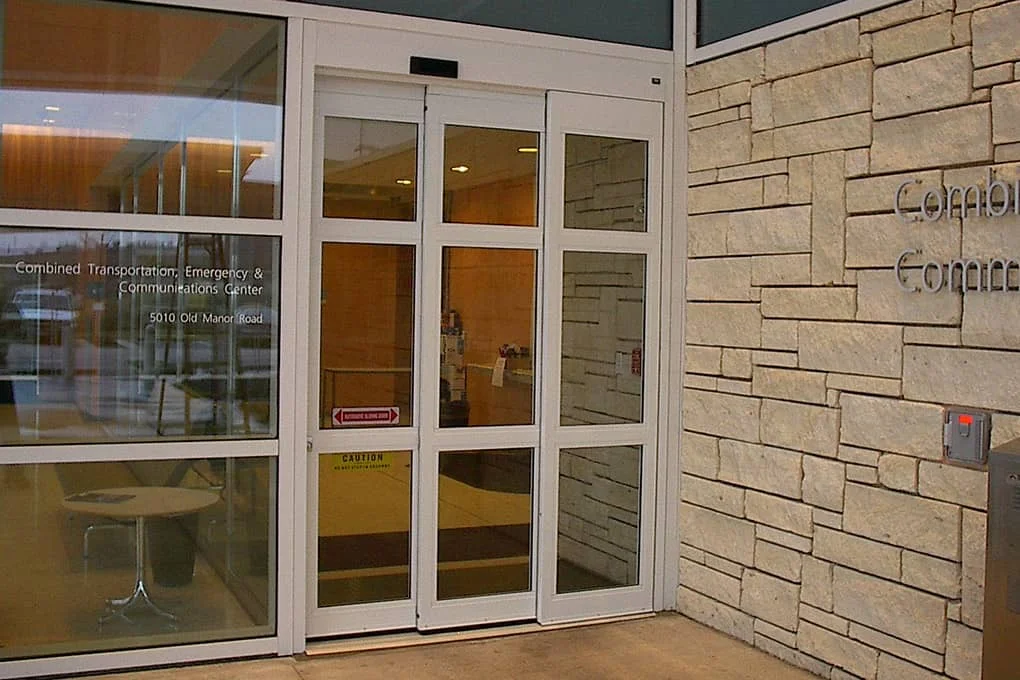
Smart glass technology works by controlling how much light and solar heat pass through glass using electrically responsive materials embedded inside a laminated glass unit. In a city like Dubai, where summer temperatures frequently exceed 40°C and buildings rely heavily on air conditioning, smart glass is not just a design feature — it becomes a climate-control solution.
Unlike conventional glazing, which allows most visible light and infrared radiation to enter indoor spaces, smart glass actively adjusts transparency and solar heat gain. This reduces glare, lowers cooling demand, and improves energy efficiency in high-sun environments.
To understand why smart glass is increasingly relevant in Dubai, it is important to look at both the science behind it and its measurable performance in extreme heat conditions.
What Happens Inside Smart Glass?
Smart glass contains a specialised interlayer between two sheets of safety glass. This interlayer responds to electricity by altering the alignment of microscopic crystals or ions. When the alignment changes, the amount of light passing through the glass changes as well.
In practical terms, this means the glass can switch from clear to opaque for privacy, or from clear to tinted to reduce solar heat.
The key technologies used in architectural smart glass include PDLC and electrochromic systems. Each performs differently, especially in hot climates like the UAE.
How PDLC Smart Glass Works for Privacy
PDLC, or Polymer Dispersed Liquid Crystal glass, is commonly used in offices, villas, and commercial interiors across Dubai.
When the power is switched off, liquid crystals inside the glass are scattered randomly. This scattering disrupts light transmission, reducing visible light transmission to as low as 5 to 10 percent. The result is an opaque or frosted appearance that provides instant privacy.
When power is switched on, typically using a low-voltage current between 48 and 65 volts, the crystals align in a uniform direction. Light then passes through clearly, increasing visible light transmission to approximately 75 to 85 percent.
The switching speed is nearly instant, usually under one second. Energy consumption remains low, around 3 to 5 watts per square metre.
In Dubai, PDLC smart glass is ideal for meeting rooms, bathrooms, clinics, and executive offices where privacy needs to change quickly without installing curtains or blinds.
However, PDLC is mainly designed for privacy control rather than significant heat reduction.
How Electrochromic Smart Glass Reduces Heat in Dubai
Electrochromic glass is more suitable for Dubai’s climate because it directly reduces solar heat gain. This glass contains ultra-thin metal oxide layers, often tungsten oxide. When a small electrical charge is applied, usually between 1 and 5 volts DC, ions move between internal layers. This movement causes the glass to gradually darken. In its clear state, electrochromic glass may allow around 60 percent of visible light to pass through. In its darkest state, this can drop to 1 to 5 percent. More importantly, the solar heat gain coefficient can reduce by up to 40 to 50 percent when tinted. In practical building terms, this means less solar radiation enters indoor spaces. In Dubai, where glass façades are common in high-rise buildings and villas, this reduction can lower cooling loads by 10 to 25 percent depending on orientation and glazing area. Because air conditioning is one of the highest energy costs in the UAE, reducing solar heat directly improves energy performance and occupant comfort.
Measurable Performance in Hot Climates
Standard single glazing typically has a solar heat gain coefficient around 0.85, meaning most solar energy passes through. Smart glass systems, especially when combined with double glazing, can significantly reduce this value.
When paired with insulated glass units, U-values can drop from approximately 5.8 W/m²K in single glazing to between 1.6 and 2.0 W/m²K. Lower U-values mean better insulation and less heat transfer.
In Dubai’s climate, where façades are exposed to intense sunlight for long hours, this performance difference becomes noticeable. Indoor temperatures stabilise more quickly, glare reduces, and air conditioning cycles operate more efficiently.
Why Smart Glass Is Growing in Dubai Architecture
Dubai architecture heavily features:
• Floor-to-ceiling glazing
• Glass curtain walls
• Skylights
• Luxury villa façades
While aesthetically appealing, these designs increase solar exposure. Smart glass provides a modern solution that maintains architectural transparency while managing solar gain.
Instead of relying on heavy curtains or external shading devices, dynamic glazing allows the building envelope to respond to sunlight conditions in real time.
This aligns with Dubai’s broader focus on energy efficiency, sustainability targets, and smart building development.
Is Smart Glass Worth It in Dubai?
In regions with mild weather, smart glass may be considered a luxury upgrade. In Dubai, it functions as a performance glazing system.
For villas with large window areas, smart glass helps reduce indoor overheating. For commercial towers with curtain wall façades, it reduces glare and cooling loads. For offices and hospitality spaces, it eliminates the need for blinds while maintaining privacy.
Because energy costs are closely tied to cooling demand, the return on investment becomes stronger in climates with prolonged heat exposure.
Final Perspective
Smart glass technology transforms traditional glass work from a passive construction element into an active environmental control system. By managing light transmission and solar heat gain at a microscopic level, it improves indoor comfort, energy efficiency, and architectural flexibility in modern buildings.
In Dubai’s extreme climate, where sunlight intensity and cooling demand remain high throughout the year, advanced glass work solutions like dynamic glazing provide measurable performance benefits rather than purely aesthetic value.
As construction trends shift toward energy-efficient façades and intelligent building systems, smart glass is increasingly becoming a key component of high-performance glass work across contemporary developments in the UAE.
FAQs
1. Does smart glass really reduce heat in Dubai?
Yes. Electrochromic smart glass can reduce solar heat gain by up to 40–50% when tinted. In Dubai’s hot climate, this helps lower indoor temperatures and reduces air conditioning load, especially in buildings with large glass areas.
2. Is smart glass suitable for villas in Dubai?
Smart glass is highly suitable for Dubai villas, particularly for large windows, skylights and glass partitions. It improves privacy, controls glare and reduces heat without blocking natural light.
3. What is the difference between smart glass and tinted glass?
Tinted glass permanently reduces light transmission, while smart glass allows adjustable transparency. Smart glass can switch between clear and opaque or dark states, offering more flexibility.
4. How much electricity does smart glass consume?
PDLC smart glass typically consumes 3–5 watts per square metre when transparent. Electrochromic glass only uses electricity during the tint transition and consumes minimal power overall.
5. Can smart glass be installed in existing windows?
In some cases, smart film can be applied to existing glass surfaces. However, for better performance and durability, factory-laminated smart glass panels are recommended.
6. Is smart glass energy efficient?
Yes. By reducing solar heat gain and glare, smart glass can lower cooling energy usage by 10–25% depending on building orientation and glazing size.
7. How long does smart glass last?
High-quality smart glass systems typically last between 10 and 20 years, depending on installation quality, electrical stability and environmental exposure.
8. Does smart glass provide sound insulation?
Smart glass alone does not guarantee soundproofing. However, when installed as part of a double-glazed or laminated system, it can improve noise reduction.
9. Is smart glass safe for residential use?
Yes. Smart glass is usually manufactured using tempered or laminated safety glass, making it suitable for residential and commercial buildings.
10. How quickly does smart glass switch?
PDLC smart glass switches almost instantly, usually within one second. Electrochromic glass transitions gradually over several minutes.
11. What is the difference between PDLC and electrochromic smart glass?
PDLC is primarily used for privacy control and switches instantly. Electrochromic glass is used for solar heat reduction and gradually changes tint levels.