
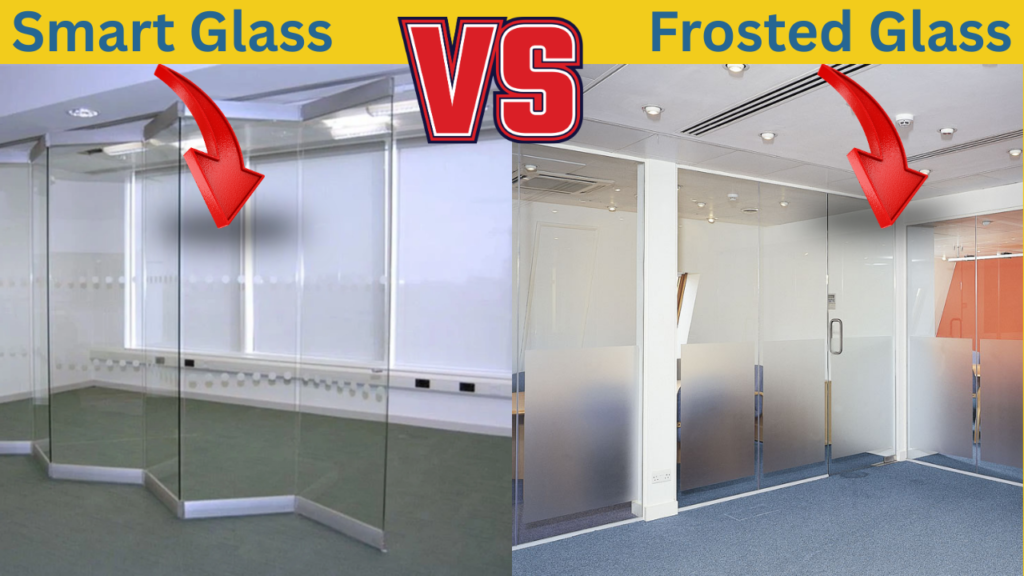
When designing offices, villas, or commercial interiors, privacy glass is often a key requirement. Two common solutions are smart glass and frosted glass. Both provide privacy, but they function very differently in terms of technology, flexibility, cost, and performance.
If you are choosing between smart glass and frosted glass, the decision should not be based on appearance alone. It should be based on how each option performs, especially in climates like Dubai where sunlight intensity and cooling demand are high throughout the year.
This guide explains the technical differences, privacy performance, energy impact, durability, and practical applications of both systems.
What Is Frosted Glass?
Frosted glass is standard glass that has been permanently treated to create a translucent surface. This is usually achieved through sandblasting, acid etching, or applying a frosted film.
The treatment scatters light passing through the glass. Instead of seeing clearly through it, shapes appear blurred while light continues to pass through.
Visible light transmission typically ranges between 60 to 80 percent, depending on thickness and finishing method. However, privacy is permanent. Once frosted, the glass cannot switch back to clear.
Frosted glass is simple, durable, and does not require electricity. It is commonly used in bathrooms, office partitions, staircases, and decorative panels.
What Is Smart Glass?
Smart glass, also known as switchable glass or privacy glass, contains a special interlayer that changes transparency when electricity is applied.
The most common type for privacy is PDLC smart glass. Inside the glass, microscopic liquid crystals align or scatter depending on whether power is on or off.
When power is off, light scatters and the glass becomes opaque, reducing visible light transmission to around 5 to 10 percent. When power is on, crystals align and transparency increases to approximately 75 to 85 percent.
The transition occurs almost instantly, usually within one second.
Unlike frosted glass, smart glass allows you to switch between privacy and full transparency whenever needed.
Privacy Control: Fixed vs Adjustable
The main difference between smart glass and frosted glass lies in flexibility.
Frosted glass provides permanent privacy. It is always translucent and cannot be adjusted. This works well in areas where visibility is never required, such as bathrooms or storage spaces.
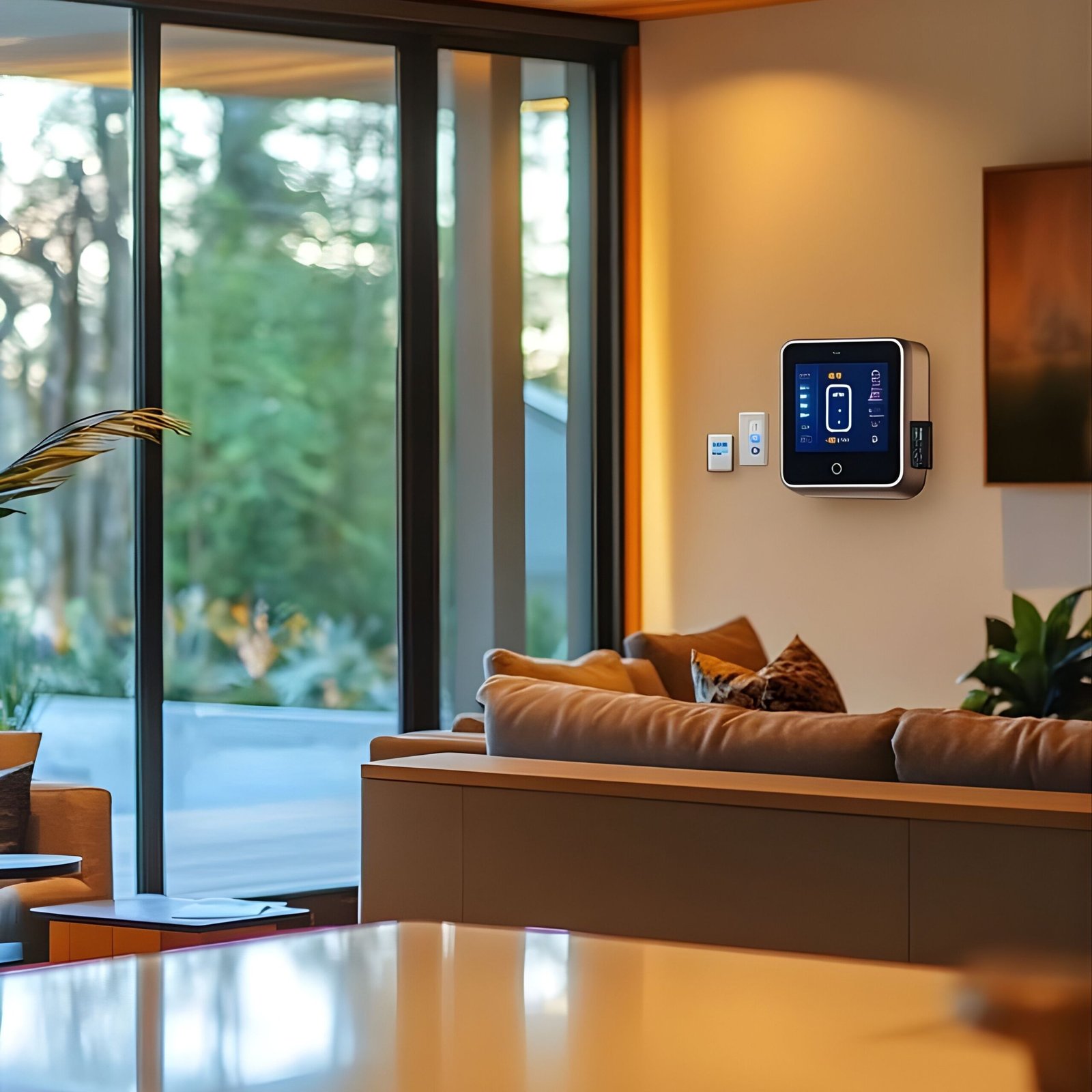
Smart glass provides dynamic privacy. It can switch between transparent and opaque states. In offices, this allows meeting rooms to remain open and bright most of the time while offering privacy during discussions. In villas, it allows homeowners to enjoy clear views during the day and activate privacy at night.
For environments that require flexible use of space, smart glass offers greater functional value.
Light Transmission and Visual Comfort
Frosted glass allows natural light to enter while diffusing it evenly. It reduces direct glare but does not significantly reduce solar heat gain.
Smart glass, depending on the technology used, can both provide privacy and control light transmission. Electrochromic smart glass can gradually tint to reduce glare and lower solar heat gain by up to 40 to 50 percent in its darkest state.
In a city like Dubai, where direct sunlight can increase indoor temperatures rapidly, glare control becomes a comfort and energy issue rather than just a visual one.
Energy Efficiency in Hot Climates
In hot regions, glass performance affects cooling demand.
Standard frosted glass does not actively reduce solar heat gain. Its solar heat gain coefficient remains similar to that of clear glass unless combined with low-emissivity coatings or double glazing.
Electrochromic smart glass, however, reduces heat entry by adjusting tint levels. Buildings using dynamic glazing systems have reported cooling load reductions between 10 to 25 percent depending on orientation and glazing area.
In high-rise buildings with curtain wall façades, this reduction can significantly lower peak electricity demand.
For villas with large window surfaces exposed to west-facing sun, smart glass can reduce overheating during peak afternoon hours.
Cost Consideration
Frosted glass is significantly more affordable. It involves simple surface treatment or film application. Installation costs are comparable to standard glass systems.
Smart glass requires laminated safety glass, conductive layers, wiring, and a control system. The initial cost is higher because it includes advanced materials and electrical integration.
However, cost should be evaluated in context. In commercial offices where privacy flexibility increases space usability, smart glass can eliminate the need for blinds and improve interior design value. In energy-intensive buildings, the cooling savings may offset part of the investment over time.
Maintenance and Durability
Frosted glass requires minimal maintenance beyond regular cleaning. Because it contains no electronic components, it has fewer points of failure.
Smart glass systems typically last between 10 and 20 years depending on installation quality and electrical stability. Proper wiring and sealing are critical to prevent long-term issues.
Both options can be manufactured as tempered or laminated safety glass to meet building safety standards.
Aesthetic and Architectural Impact
Frosted glass offers a consistent translucent look. It works well in traditional interiors or where design consistency is required.
Smart glass creates a modern, high-tech appearance. The ability to switch from clear to opaque enhances minimal architectural design and supports open-plan layouts.
In luxury developments and premium office environments in Dubai, smart glass aligns more closely with modern architectural trends focused on intelligent building systems.
Which Is Better for Privacy?
If the goal is simple, permanent privacy at low cost, frosted glass is effective and practical.
If the goal is flexible privacy, modern aesthetics, glare control, and improved energy performance, smart glass offers greater long-term value.
In Dubai’s climate, where sunlight exposure and cooling demand are major factors, smart glass provides additional benefits beyond privacy. It contributes to indoor comfort and energy efficiency while maintaining architectural transparency.
The right choice depends on budget, usage pattern, and building orientation. For fixed privacy areas, frosted glass is sufficient. For dynamic environments such as meeting rooms, villas with panoramic views, or modern commercial spaces, smart glass is the more advanced solution.