
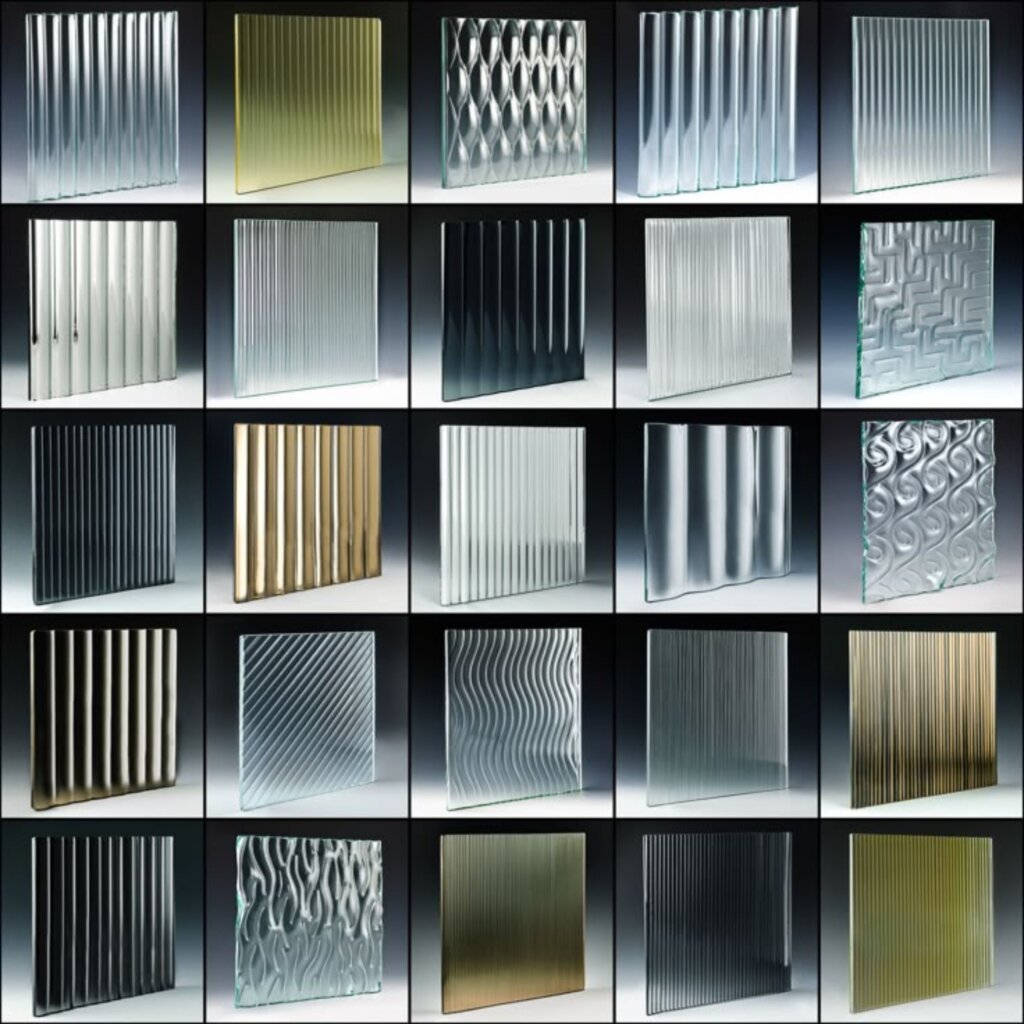
Laminated glass is safety glass made from two or more glass panes bonded around an interlayer that holds the broken pieces together after impact.
Laminated glass is a glass assembly made by bonding two or more panes around a flexible interlayer. The interlayer connects the panes and holds glass fragments in place if the panel breaks.
The finished panel usually looks like standard clear glass. Its main difference becomes visible after impact. Instead of separating into loose pieces, the broken fragments remain attached to the interlayer.
Common laminated glass build-ups include:
These thicknesses describe the glass assembly, not its suitability for a specific job. Panel size, support points, wind pressure, impact risk, fixing method, edge exposure, and building height also affect the required specification.
Laminated glass is made by placing a clean interlayer between prepared glass panes and bonding the layers with heat and pressure. This process creates one connected glass unit.
The fabricator first cuts the glass to its final dimensions. Any holes, notches, curves, polished edges, or hardware cut-outs must be completed before heat treatment and lamination.
The panes and interlayer are then assembled in a controlled environment. Air is removed from between the layers before the glass enters an autoclave or another approved bonding system.
An autoclave applies controlled heat and pressure. This bonds the glass and interlayer, removes visible air pockets, and creates the clear finished panel.
Once tempered or heat-strengthened laminated glass has been produced, installers cannot cut or drill it on site. Accurate measurements and approved shop drawings therefore matter before fabrication starts.
When laminated glass breaks, the interlayer holds many of the cracked fragments together. The panel develops a visible fracture pattern but may continue covering the opening.
This post-breakage behaviour is the main reason laminated glass is used for safety glazing. It reduces the chance of large pieces falling from a balcony, canopy, skylight, facade, or full-height window.
However, laminated glass is not unbreakable. A damaged panel has lost part of its original strength and should not remain in service without inspection.
Laminated glass can be designed for safety, sound control, structural performance, security, decoration, solar control, or a mix of these functions.
The interlayer and base glass determine much of the finished panel’s performance. A clear PVB window and a structural SGP railing may both be laminated, but they serve very different purposes.
PVB laminated glass uses a polyvinyl butyral interlayer. It is the most common form of laminated safety glass used in buildings.
PVB provides good optical clarity, fragment retention, UV filtering, and sound damping. It can be clear, coloured, tinted, or made with an acoustic formulation.
Standard PVB laminated glass works well for windows, doors, partitions, shopfronts, mirrors, and many internal safety applications. It is usually more cost-effective than structural ionoplast glass.
Acoustic laminated glass contains a sound-damping interlayer designed to reduce vibration through the panel. This helps lower the amount of noise passing through the glass.
It is useful for homes near busy roads, offices in Business Bay, hotel rooms, meeting areas, schools, clinics, and apartments near construction sites.
Tested acoustic glass systems can achieve sound transmission class ratings from around STC 35 to above STC 50, depending on pane thickness, air gaps, frames, seals, and the full wall system.
The glass cannot solve every noise problem on its own. Sound may also enter through doors, ventilation openings, walls, ceilings, damaged seals, and lightweight frames.
SGP is a common industry term for laminated glass made with a structural ionoplast interlayer, such as SentryGlas.
Structural ionoplast is stiffer than standard PVB. This allows the broken panel to retain more of its shape and load-bearing ability in selected applications.
SGP laminated glass may be specified for balustrades, canopies, facades, glass fins, floors, point-fixed panels, and other structural systems.
The interlayer does not replace engineering calculations. Panel size, glass treatment, temperature, load duration, fixing points, and supporting structures still determine whether the system is suitable.
VA laminated glass uses an ethylene vinyl acetate interlayer. It is often selected for decorative glass and specialist designs.
Fabric, coloured film, printed graphics, metal mesh, leaves, patterns, or other materials can be placed between the glass panes. This makes EVA useful for feature walls, decorative partitions, retail displays, and branded interiors.
Exterior and wet-area applications need suitable product data. The supplier should confirm adhesion, moisture resistance, edge stability, temperature performance, and resistance to yellowing.
Security laminated glass uses multiple glass and interlayer layers to resist forced entry, impact, blast pressure, or ballistic threats.
These systems are designed and tested as full glass assemblies. Adding a second pane or thicker interlayer does not automatically create bullet-resistant or blast-resistant glass.
EN 356 covers resistance to manual attack, while EN 1063 applies to bullet-resistant glazing. Bullet-resistant products may be classified from BR1 to BR7 based on the tested threat level.
Frames, anchors, locks, wall connections, and installation details must match the glass rating. A strong panel inside a weak frame does not create a secure opening.
Laminated glass is used in places where falling glass, impact, UV exposure, noise, security, or retained breakage creates a clear concern.
Dubai properties often contain large glass areas, which makes correct glass selection more important. The risk increases when panels sit above people, beside a drop, near traffic, or across a building facade.
Common applications include:
Each application needs its own glass build-up. The same 10.76 mm laminated panel should not automatically be used for a bedroom window, balcony railing, roof panel, and glass floor.
Laminated glass is used for balcony railings because the interlayer helps retain fragments and maintain a temporary barrier after breakage.
A railing must resist more than normal window loads. People may lean against it, furniture may strike it, and wind pressure may act across a large panel.
The glass thickness, interlayer, panel width, height, support system, handrail, base channel, anchors, and surrounding structure must work together.
Choosing a balcony panel only by thickness ignores the behaviour of the full railing system. Two panels with the same total thickness may perform differently when they use different interlayers or fixing methods.
Laminated glass suits villa windows where safety, noise, UV filtering, or security matters.
It is useful for floor-to-ceiling windows, children’s rooms, ground-floor openings, large sliding doors, and windows beside stairs or level changes.
For heat control, laminated glass can be combined with a Low-E coating or placed inside a double-glazed insulated unit. This pairing addresses safety and solar performance rather than expecting one clear laminated pane to do both jobs.
Laminated glass thickness should be calculated from the application, panel size, support method, load, glass treatment, interlayer, edge condition, and required safety performance.
There is no single minimum thickness that suits every window, railing, skylight, partition, or facade.
A small framed internal window may use a relatively thin laminated panel. A frameless railing supported from the floor may require two thick heat-treated panes with a structural interlayer.
A glass floor needs a multi-layer build-up designed for dead loads, live loads, impact, slip resistance, redundancy, and post-breakage support.
The quotation should describe the complete build-up. “12 mm laminated glass” is not clear because it does not identify the individual pane thicknesses, interlayer type, interlayer thickness, or glass treatment.
Choose a supplier or contractor that explains the glass build-up, application, standards, installation system, and warranty in writing.
A quote that only states “laminated safety glass” does not provide enough detail. It should identify the pane thicknesses, interlayer, heat treatment, coating, edge finish, hardware, frame, and installation method.
Ask the company to explain why it selected that specification. The answer should connect the glass to the actual risk.
If the project involves a railing, the contractor should discuss fall protection and post-breakage performance. If it involves a bedroom, the discussion should cover noise and heat. If it involves a canopy, the contractor should address overhead safety, drainage, and support.
Also confirm whether the company fabricates the glass itself or orders it from a separate processor. Either approach can work, but one contractor should remain responsible for measurements, drawings, delivery, installation, and warranty claims.
Laminated glass is not unbreakable. Strong impact, edge damage, thermal stress, structural movement, or excessive loads can crack it.
Laminated glass is better when the opening should remain covered after breakage. Tempered glass is better when higher strength and a safer fragmentation pattern meet the project need.
Acoustic laminated glass can reduce outside noise by damping vibration through a specialised interlayer. Strong results also depend on the second pane, air space, frame, seals, walls, doors, and ventilation gaps.
Laminated glass can support lower cooling demand when it forms part of a Low-E or solar-control double-glazed unit. Standard clear laminated glass offers limited thermal insulation by itself.
Laminated safety glass is widely used for balcony railings because its interlayer helps retain fragments and maintain a temporary barrier after breakage.
Annealed laminated glass may sometimes be processed by a specialist, depending on its construction, but tempered or heat-strengthened laminated glass cannot be cut or drilled after production.
A glass marking, product certificate, invoice, or visible interlayer at the edge can help identify laminated glass. A cracked laminated panel also tends to remain together instead of separating into loose fragments.
Laminated glass is not simply a thicker version of ordinary glass. It is a bonded safety system designed to control what happens after a panel breaks.
Start by defining the risk. If the glass sits above people, beside a drop, near a busy road, across a secure entrance, or in direct Dubai sunlight, each condition points to a different specification.
Then compare the pane type, interlayer, thickness, coating, frame, hardware, and fixing method as one connected system. Ask for product data, clear shop drawings, recognised standards, and written installation details before fabrication starts.