
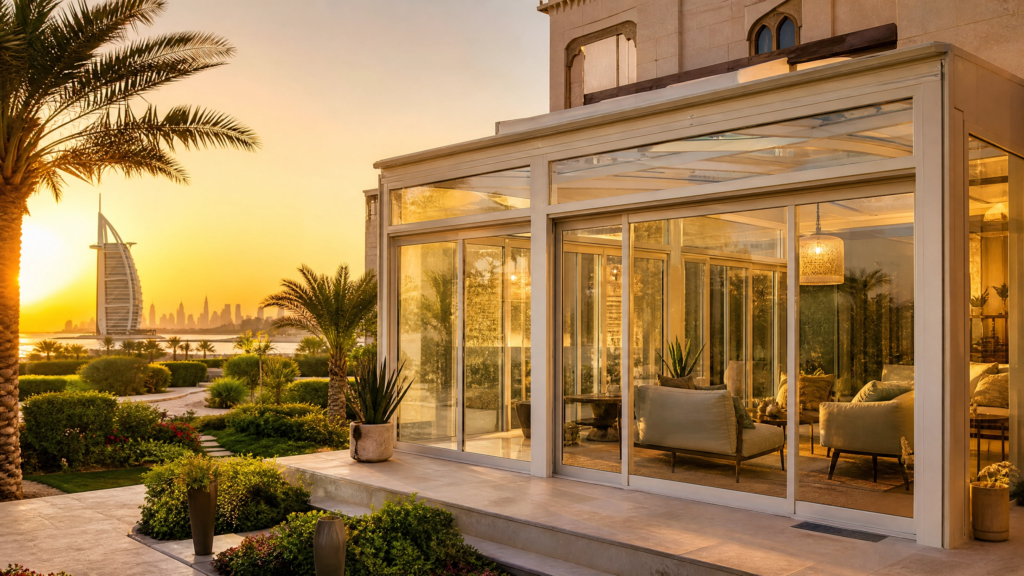
Most people jump straight into “what it should look like.”
That’s usually where things go wrong.
A sunroom is not only about its appearance from the outside. All that matters is how it feels when you use it. If you are not sure about how you want the feel to be, no design will help you. The sunroom can end up being underused.
So before anything else, ask yourself one simple thing:
Where do you see yourself actually using this space?
Morning coffee? Evening sitting? A quiet corner away from the main living area?
That answer matters more than the design style.
Every home in Dubai is different, and sunrooms don’t work as “one design fits all.”
Take some time out and put thought into the area that you are planning to install a sunroom in.
Is it a garden area that already feels calm?
A terrace that gets too exposed during the day?
A side space that’s just sitting there unused?
The design should complement the space. Trying to force a design into the wrong spot is one of the main reasons sunrooms feel slightly off.
In Dubai, sunlight is not something you ignore.
The direction your sunroom faces will change everything.
If you are planning to install a sunroom in a place that gets direct sunlight for most of the day, the design should be able to tolerate that. Conversely, if you are planning to install it at a rather shady place, you might want to look into more open options.
A lot of people get confused here and end up making a bad decision. The result? A sunroom that isn’t comfortable and is left unused. This mostly happens because people mainly focus on glass and structure rather than considering how the sunlight behaves in that specific area.
Always remember that a good design works with the light, not against it.
This is where your design really starts to take shape.
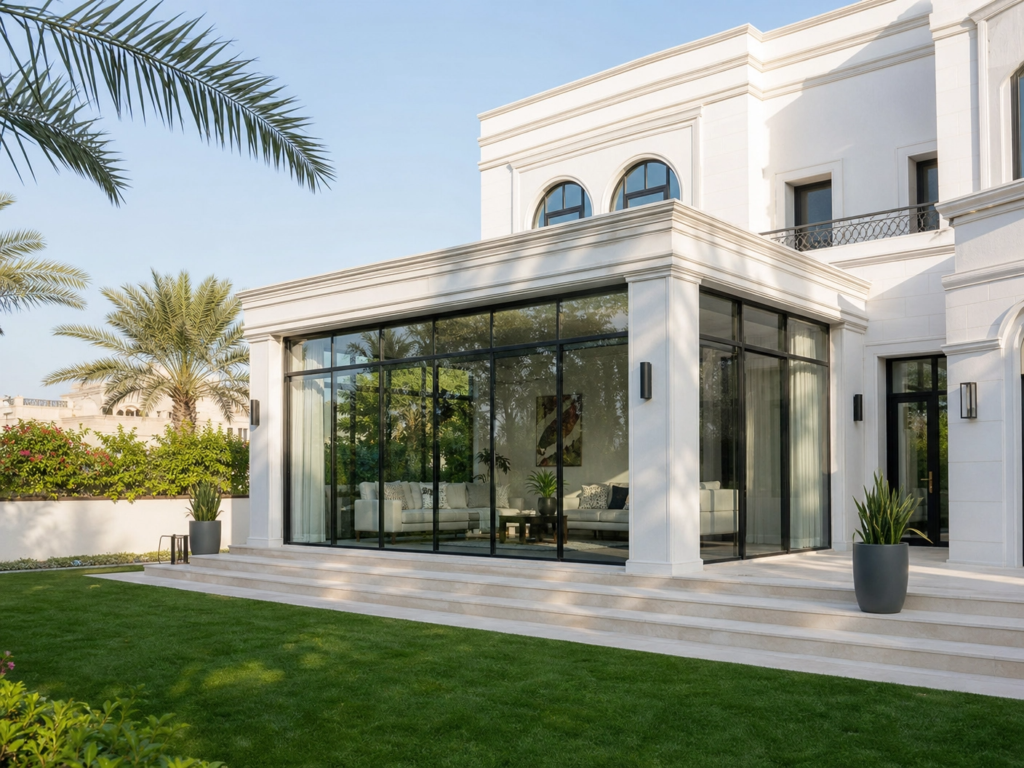
If your goal is to expand your living space slightly, an extension-style sunroom works well. It connects directly to the house and feels like a natural continuation.
It’s a good option if you want something that blends into your daily routine without feeling separate.
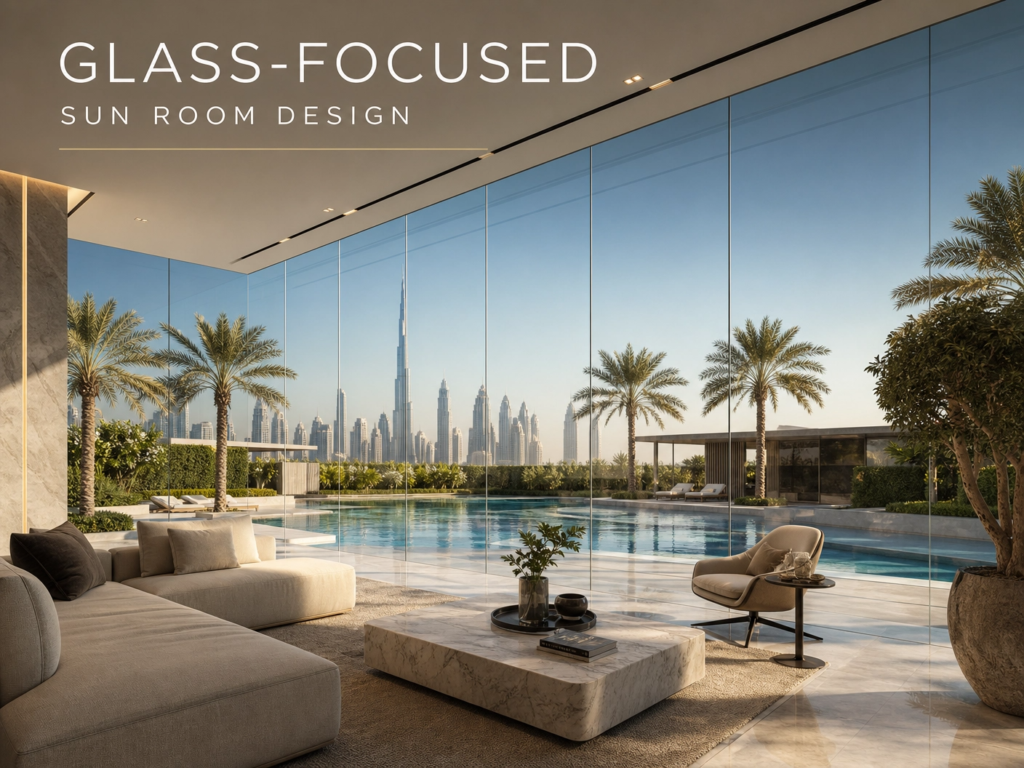
If you care more about openness and aesthetics, then a glass-heavy design makes more sense.
This is where you get those clean lines, minimal framing, and a very open feel. It’s less about adding space and more about improving how the space looks and feels.
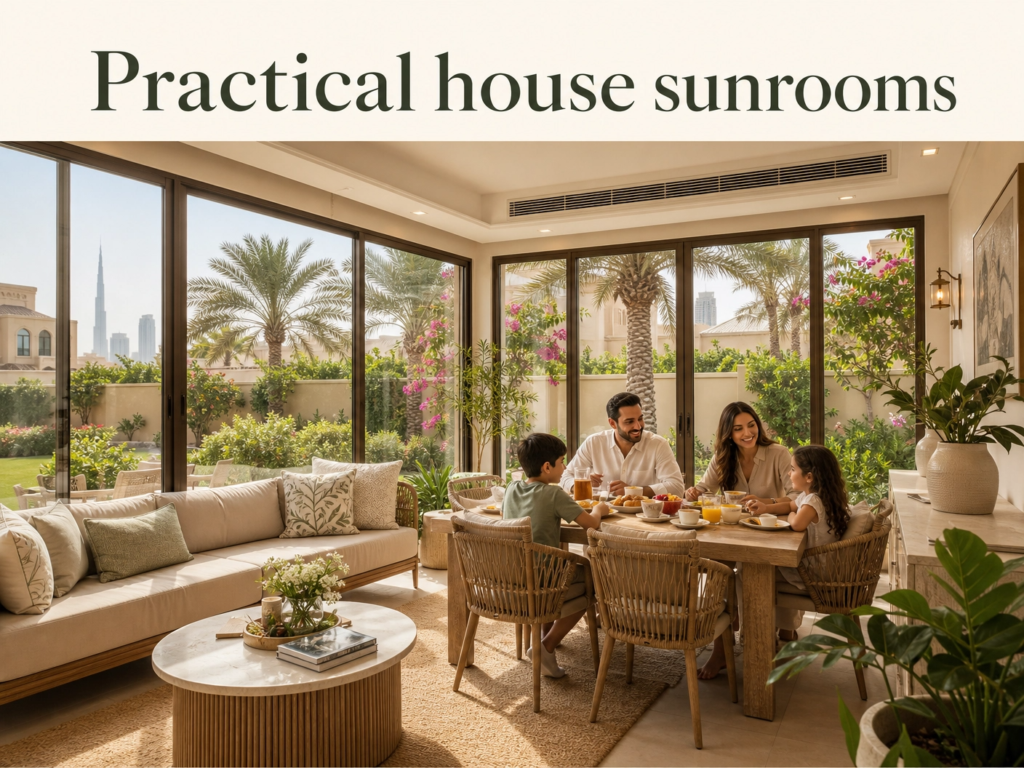
Some designs are built around actual use, not just appearance.
These are the ones where people end up spending real time—sitting, relaxing, sometimes even eating. They’re usually planned more around comfort than visual impact.
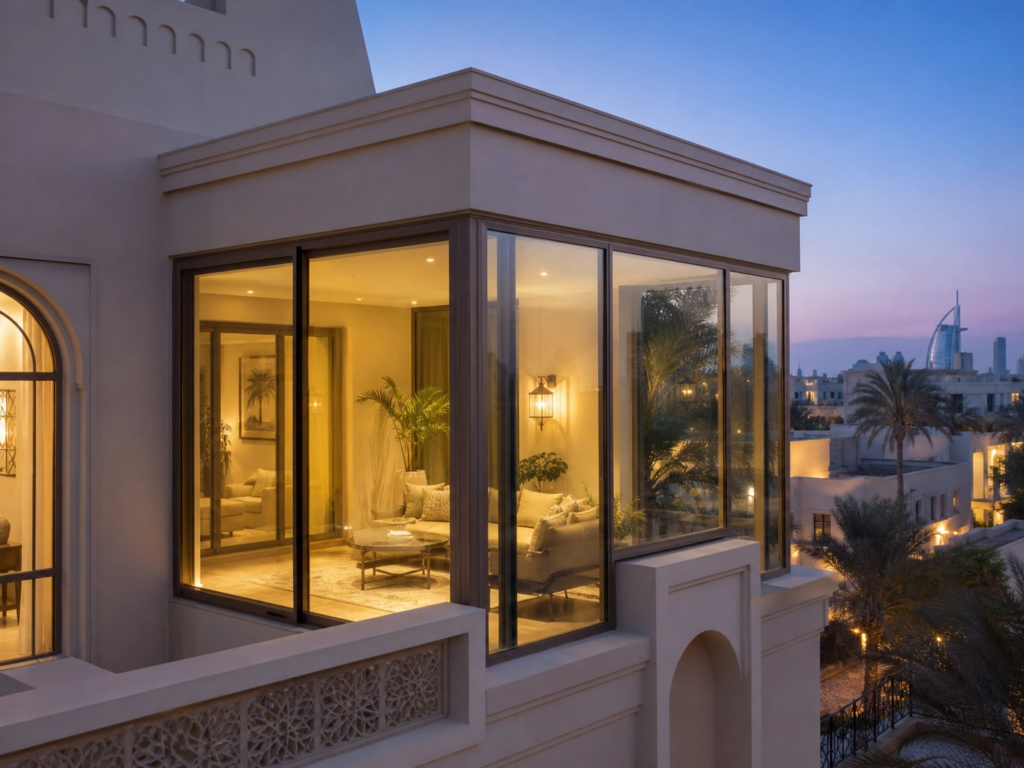
Sometimes the best design is the one you barely notice.
A well-integrated addition doesn’t feel like something new was built. It just fits into the house naturally. That usually comes down to proportions and alignment more than anything else.
The key is not to complicate things. Do only what’s necessary. A lot of people try to do too much in the hope of creating something good, but it turns out to be a disaster.
If you focus on adding extra features, heavy framing, and unnecessary detailing, all these things add up and takes away from the main idea.
The best sunrooms are usually the simplest ones.
Clean structure. Clear glass. Balanced proportions.
If it starts to feel complicated on paper, it will probably feel heavy once it’s built.
This factor can be overlooked very easily.
Even a well-designed sun room can feel wrong if it doesn’t connect properly to the main structure.
The transition should feel natural. Not like you’re stepping into a different zone, but like the space just continues.
When this part is done right, the whole setup feels intentional. When it’s not, it feels like an add-on.
This happens more often than it should.
Two sunrooms can be priced similarly, but feel completely different once they’re done.
That difference usually comes from design thinking, not materials.
If you choose purely based on cost, you might save upfront but lose out on how the space actually works long-term.
You don’t need a long checklist here.
Just pay attention to how the conversation goes.
Are they asking about your space, your layout, and how you plan to use it?
Or are they just talking about options and pricing?
That difference tells you everything.
A good design usually comes from understanding first, not selling first.
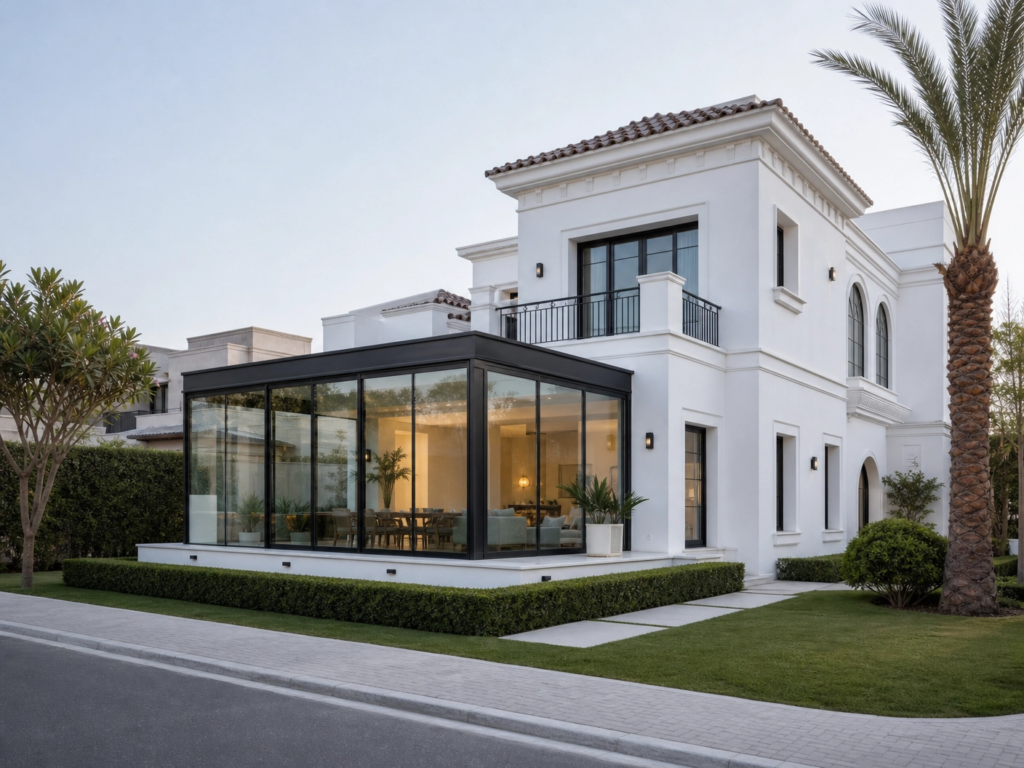
There isn’t one.
The best sunroom design is the one that:
That’s it.
Everything else is secondary.
Choosing a sunroom design is less about picking a style and more about understanding your space. Once that part is clear, the design becomes much easier, and the result feels right from day one.
Start with how you plan to use the space, then choose a design that fits that, not just something that looks good.
It depends on your space and sunlight. More glass works well for openness, but only if the light is managed properly.
In most cases, yes. It just needs to be designed around your existing layout so it doesn’t feel out of place.
Not always. The outcome depends more on design decisions than just cost.