
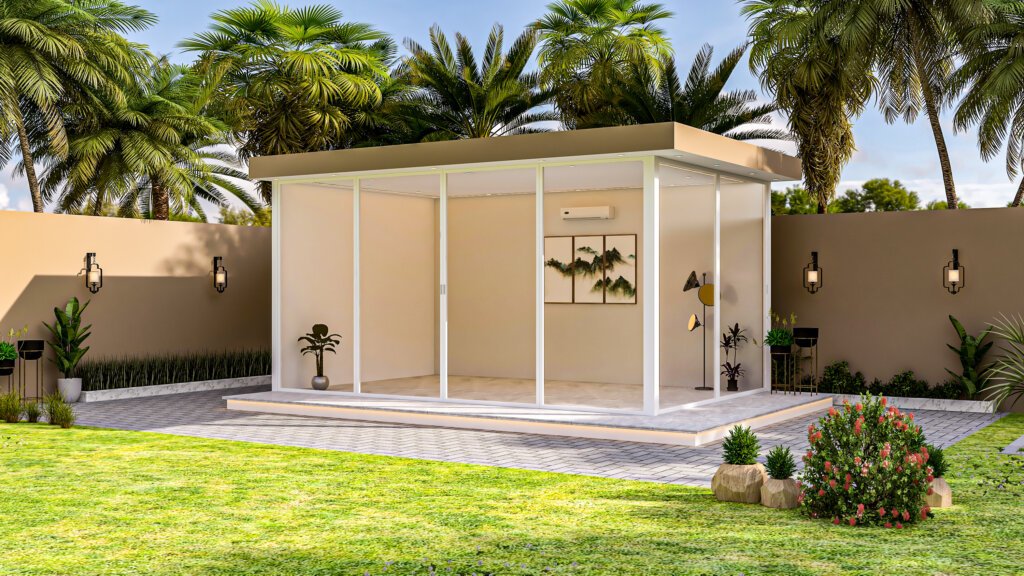
A luxury glass room is a custom-built, fully glazed living space attached to or integrated into a Dubai villa, using high-specification glass and aluminium systems to create a year-round, climate-controlled indoor-outdoor environment.
A luxury glass room is a fully glazed, custom-built space added to a Dubai villa using double-glazed Low-E or smart glass, a thermally broken slim aluminium frame, and optional automation. It differs from a standard glass room in glass specification, frame quality, finish, and performance. Cost ranges from AED 50,000 to AED 120,000 for a residential installation. North-facing placement works best in Dubai. Installation takes 3 to 4 weeks from site visit to handover.
Most Dubai villas have a space that never gets used properly. A corner of the garden that is too exposed. A poolside terrace that is beautiful from inside but impossible to sit in from May through September. A rooftop that gets looked at, not lived on.
A luxury glass room solves that problem permanently.
But the word “luxury” gets attached to everything in Dubai, so it is worth being specific. A luxury glass room is not just a glass room that costs more. It is a structurally different product, built to a different specification, using different materials, and designed with a completely different level of finish. This article explains exactly what that means, what it costs, and how to decide whether it is the right addition to your villa.
A luxury glass room is a custom-designed, fully glazed enclosed space built onto or around a Dubai villa. It uses high performance glass panels set into slim or frameless aluminium frames to create a living area that feels open, bright, and connected to the outdoors while staying protected from heat, dust, humidity, and insects.
The structure sits between your indoor home and your outdoor space. When done correctly, it does not feel like an add on. It feels like the room was always meant to be there.
What separates a luxury version from a standard glass room comes down to four things: the glass specification, the frame profile, the finish quality, and the level of automation built into the system. A basic glass room uses standard tempered glass, a visible aluminium frame, and manual panels. A luxury glass room uses double-glazed Low-E glass or smart glass, a thermally broken slim-profile frame, a custom powder coat or anodised finish, and often integrates motorised blinds, automated panel systems, or app-controlled smart glass.
This is where most companies go vague. Here is what the specification difference actually looks like in practice.4.
A standard glass room typically uses 8mm single pane tempered glass. A luxury glass room uses one or more of the following 10mm to 12mm tempered glass, double glazed insulated glass units (IGU) with argon fill, Low-E coated glass that reduces solar heat gain by up to 40%, laminated safety glass on roof panels, or PDLC smart glass that switches from clear to frosted at the press of a button. Each of these choices affects how the room performs in Dubai’s climate and how it looks from inside and out.
A standard frame is visible, functional, and typically 60mm to 80mm wide. A luxury frame uses a thermally broken aluminium profile that is 20mm to 30mm wide often called a slim-frame or minimal-frame system. Thermally broken means the frame has a non-conductive barrier inside it that stops heat passing from outside to inside. In Dubai summers, this is not a cosmetic decision. It is what keeps the room usable.
Standard frames come in white or silver. Luxury frames come in custom RAL powder coat colours, dual-tone finishes, brushed anodised aluminium, or colour-matched to your villa’s existing architecture. The difference is immediately visible.
A standard glass room opens and closes manually. A glass room can include motorised sliding or folding panels, app-controlled smart glass, hidden LED lighting integrated into the frame, motorised internal blind systems, and smart home connectivity through Alexa, Google Home, or Control4.
Dubai villa layouts vary significantly, and the type of glass room that works depends entirely on where it is going and how it will be used.
The most popular option in premium communities like Palm Jumeirah and Emirates Hills. Floor-to-ceiling frameless glass panels wrap around a poolside area, creating a lounge that has full views of the pool and garden with no structural interruption. In cooler months the panels slide fully open. In summer they stay closed with the AC running. Smart glass panels on the roof or upper sections stop glare without blocking the view.
Increasingly common in villa communities where rooftops are unused. The structure uses a slim aluminium frame fixed to the rooftop slab, with glass on all sides and a double-glazed roof. The engineering requires a structural assessment first because rooftop loads need to be checked against the original build. Most villas in Dubai Hills Estate, DAMAC Hills, and Arabian Ranches can accommodate this, but it needs to be confirmed before fabrication starts.
A freestanding or wall-attached glass room built in the villa garden, used as a dining extension, family sitting area, or home office. This is the most versatile option because it does not require rooftop access and can be sized from a compact two-person space to a room that seats twelve. Glass on three sides, integrated into the villa wall on the fourth.
Specific to UAE lifestyle. An outdoor majlis area enclosed with glass panels to create a private, climate-comfortable gathering space that still feels open and connected to the garden. Several luxury villa owners in Jumeirah and Al Barari have built these as standalone structures separate from the main house.
If you have lived in Dubai for more than one summer, you know that the city’s climate is not a minor consideration. It is the dominant factor in every outdoor class room design decision. A glass room that is not designed for Dubai’s specific conditions will be uncomfortable six months of the year regardless of how good it looks.
The three climate factors that matter most:
Direct summer sun hits glass at angles that push surface temperatures beyond what standard glass handles well. Low-E glass is not optional in a quality installation. It reflects infrared radiation while letting visible light through, keeping the interior 8°C to 15°C cooler than the same room with single-pane standard glass.
The seals around panels need to be properly specified and installed. Poor seals allow fine particulate into the frame channels, which causes tracks to drag, panels to rattle, and finishes to deteriorate within two to three years. Good installation means proper brush seals, gaskets, and drainage channels built into the frame system.
Villas in Dubai Marina, JBR, Palm Jumeirah, and Jumeirah Beach areas deal with salt air that corrodes standard steel fittings quickly. Stainless steel hardware and powder-coated aluminium rated for coastal environments are the minimum specification for any villa within 2km of the coast.
The position of your glass room determines how comfortable it will be, how much it will cost to cool, and how often you will actually use it.
North-facing is the most comfortable position in Dubai. It gets consistent indirect light without direct sun exposure. The glass room stays naturally cooler and the cooling costs are the lowest. If your villa has a north-facing garden corner or terrace, that is where to build first.
South-facing gets morning and afternoon sun at lower angles. Manageable with the right glass specification. East-facing gets direct morning sun which is less intense than afternoon sun. Also manageable.
West-facing is the hardest to get right. It gets the most direct and most intense afternoon sun. It is absolutely doable for hundreds of glass rooms in Dubai facing west but it needs the highest glass specification, external shading consideration, and proper ventilation built in.
Before any fabrication begins, a good installer will do a sun path assessment for your specific plot. If they do not mention sun direction in the first consultation, ask the question directly.
A basic glass room in Dubai starts from AED 20,000 to AED 40,000. A high-specification glass room for a residential villa runs AED 50,000 to AED 120,000 or more depending on size, glass type, and automation level.
The variables that move the price:
Most homeowners in Dubai Hills, Arabian Ranches, and Palm Jumeirah are spending AED 70,000 to AED 120,000 for a properly specified glass room. That is the realistic mid-range for a 20 to 30 sqm frameless installation with double-glazed Low-E glass and motorised elements.
Do not use price as the only selection criteria. A glass room installed at AED 35,000 that uses wrong glass specification for your sun exposure, poor seals, and basic hardware will need remediation within three years. That remediation typically costs 40% to 60% of the original installation.
A properly managed luxury glass room installation in Dubai follows this sequence:
On-site measurement, sun path review, structural check, frame colour consultation. This takes 45 to 90 minutes.
Direct summer sun hits glass at angles that push surface temperatures beyond what standard glass handles well. Low-E glass is not optional in a quality installation. It reflects infrared radiation while letting visible light through, keeping the interior 8°C to 15°C cooler than the same room with single-pane standard glass.
Aluminium profiles cut, powder coated, and assembled. Glass cut and processed to specification. Timeline: 7 to 14 days depending on glass type. Smart glass and custom specifications take longer.
Most villa glass rooms are installed in 28 to 30 working days. Rooftop structures with more complex fixing requirements may take more days.
Panels tested, automation commissioned, cleaning done, operation walk-through completed.
A properly installed glass room needs minimal but specific maintenance in Dubai’s conditions.
Monthly: Clean glass panels with a soft cloth and non-abrasive glass cleaner. Wipe track channels to remove sand and dust accumulation. Check seals around panels visually, any gaps should be addressed immediately.
Every six months: Lubricate roller carriages and track systems with the lubricant specified by your installer. Do not use WD-40 on aluminium tracks; it attracts dust. Check all multi-point locks and test soft-close mechanisms. Inspect silicone seals around fixed frame perimeters.
Annually: Full system check including frame fixing points, glass seal integrity, drainage channels, and automation function. Any discolouration on powder coat should be reported and assessed in coastal areas, early treatment prevents deeper corrosion.
Smart glass and motorised systems need their control boards checked annually and firmware updated if the manufacturer releases updates.
A luxury glass room uses double-glazed Low-E or smart glass, a thermally broken slim-frame aluminium profile, custom finish options, and integrated automation. A standard glass room uses single-pane tempered glass, a standard visible frame, and manual operation.
Basic glass rooms start from AED 20,000. Rooftop or structurally complex installations can exceed AED 150,000.
Yes, that is the point of a properly specified installation. With double-glazed Low-E glass, a thermally broken frame, and adequate cooling, a luxury glass room is comfortable in Dubai summers.
North-facing is the most comfortable and cost-efficient. South and east-facing work well with the right glass specification. West-facing is the most challenging but absolutely achievable with solar control Low-E glass and proper shading design.
Standard specifications take 3 to 4 weeks from first site visit to handover.
It can, particularly in premium communities like Palm Jumeirah, Emirates Hills, Dubai Hills Estate, and Arabian Ranches where buyers compare similar layouts and look for distinguishing features.