
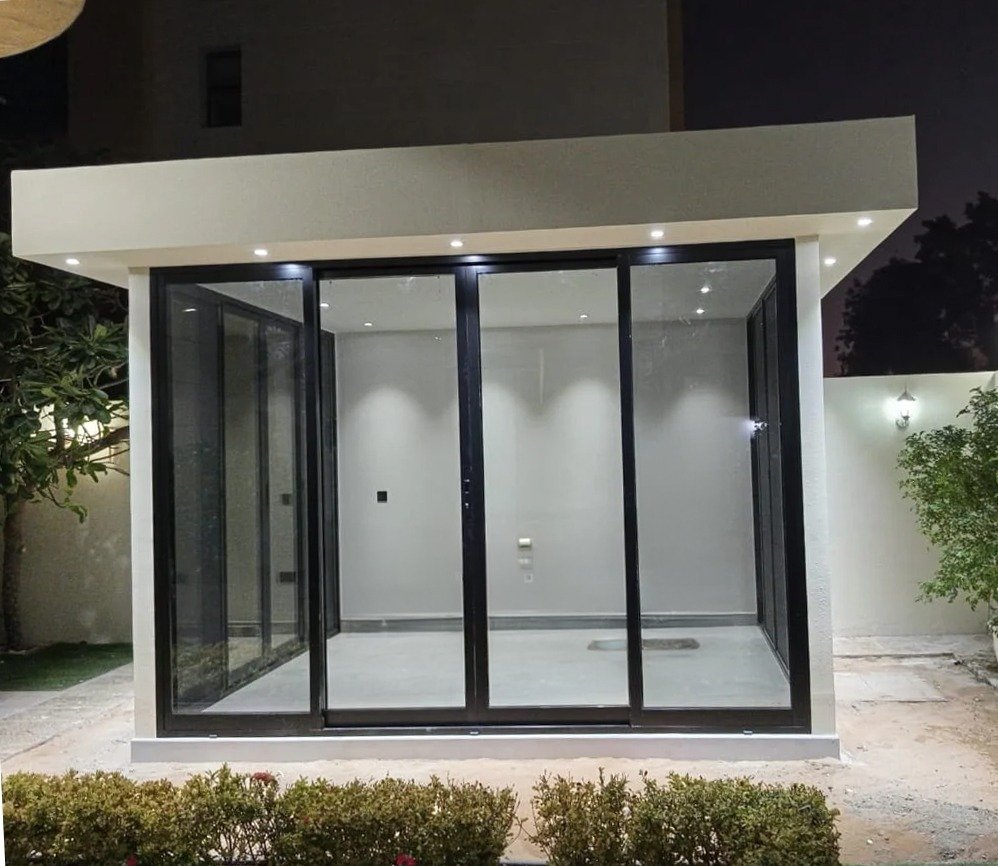
A glass job can look simple until the wrong panel starts rattling, trapping heat, leaking water, or failing a building inspection. In Dubai, the specification matters because glass must deal with intense sun, air-conditioning loads, dust, humidity, coastal salt, wind pressure, and strict property rules.
Glass works in Dubai covers the installation, repair, and replacement of partitions, shower enclosures, mirrors, doors, windows, railings, skylights, façades, and other glass systems. The right choice depends on safety, heat control, privacy, sound, location, and building approval rules. Before hiring a contractor, compare itemised quotes, confirm the glass type and thickness, verify the company’s licence, and get timelines, approvals, and warranties in writing.
Glass works in Dubai covers all professional work that turns raw or processed glass into a finished building element. It includes measurement, cutting, edge polishing, drilling, tempering, laminating, coating, framing, fitting, sealing, repair, and replacement.
Most glass companies organise their work into four service groups:
A glass manufacturer and a glass works contractor do different jobs. A manufacturer processes glass into tempered, laminated, coated, or insulated units. A contractor measures the site, selects the system, orders or fabricates components, installs them, handles approvals, and returns for snagging or repairs.
Some Dubai firms do both jobs in-house. Others buy processed glass from a manufacturer and focus on installation. Either model can work, but the main contractor must accept responsibility for measurements, specifications, installation quality, and warranty claims.
Residential glass works focus on safety, privacy, heat control, space, and daily use. Commercial glass works add fire strategy, acoustic ratings, access control, branding, larger spans, fit-out approvals, and heavier traffic.
Dubai villas commonly use glass to open views and connect indoor and outdoor areas. Typical projects include balcony railings, pool fencing, staircase balustrades, sliding garden doors, skylights, shower enclosures, custom mirrors, glass rooms, and conservatory-style extensions.
A villa in Arabian Ranches, Dubai Hills Estate, Jumeirah, Mirdif, or Palm Jumeirah may also need solar-control glazing because large openings admit more heat. For an air-conditioned room, a double-glazed insulated glass unit, or IGU, with a Low-E coating usually makes more sense than a single clear pane because the coating and sealed air space reduce heat transfer.
Offices use glass partitions to create meeting rooms, cabins, reception areas, corridors, and phone rooms while keeping the floor plate bright. Business Bay and DIFC projects often combine clear glass, frosted bands, aluminium channels, glass doors, access-control hardware, and acoustic seals.
Single-glazed partitions give visual separation but limited speech privacy. Double-glazed acoustic systems perform better because two panes, an air space, laminated layers, and sealed perimeter joints interrupt sound transmission.
Market guides in Dubai place common double-glazed acoustic partitions around AED 650 to AED 1,400 per square metre. Performance and cost rise when doors, ceiling voids, wall connections, and floor junctions receive acoustic treatment. ls, clinics, restaurants, warehouses, and marine businesses may also need shopfront glass, automatic doors, display glass, fire-rated assemblies, curtain walls, glass canopies, or vessel windows.
Marine glass work needs a project-specific design because vibration, impact, salt exposure, curvature, and watertight sealing differ from normal building conditions. The contractor must specify both the glass build-up and the corrosion resistance of the surrounding fittings.
Choose glass by function, not appearance alone. Safety, location, panel size, support method, heat exposure, wind load, privacy, sound, and maintenance all affect the specification.
Use these decision rules as a starting point:
These are selection principles, not final engineering instructions. Large panels, balcony railings, façades, canopies, and point-fixed systems need calculations for wind, impact, support, and deflection.
Tempered glass is heat-treated safety glass made stronger than ordinary float glass. When it breaks, it normally fragments into many small pieces rather than large sharp shards.
Common interior thicknesses include 6 mm, 8 mm, 10 mm, and 12 mm, but thickness alone does not prove that a panel is safe for a given use. Panel dimensions, holes, edge condition, support points, loads, and installation details also matter.
Laminated glass bonds two or more glass layers with an interlayer such as PVB or SGP. The interlayer helps hold broken pieces together, which reduces the chance of an open gap after impact.
A double-glazed unit contains two panes separated by a sealed spacer and an air- or gas-filled cavity. Low-E glass adds a thin coating that limits heat transfer while allowing useful daylight to enter.
In Dubai, this pairing can reduce solar heat entering an air-conditioned room, which can lower cooling demand. The actual DEWA saving depends on window area, direction, shading, frame quality, seal condition, thermostat setting, and the glass unit’s solar heat gain coefficient and U-value.
Frosted glass obscures the view while admitting light. Contractors create the effect through acid etching, sandblasting, ceramic treatment, patterned glass, or an applied privacy film.
Tinted glass absorbs or alters part of the incoming light. A dark tint may reduce brightness and glare, but it does not automatically provide the same heat performance as a properly selected Low-E or solar-control coating.
Smart glass changes from clear to private when an electrical signal activates its switchable layer. PDLC smart glass is common in meeting rooms, clinics, bathrooms, and high-end homes where users want instant visual privacy.
It does not automatically provide strong heat or sound control. Ask for separate figures for visible light transmission, solar performance, haze, acoustic rating, power use, switching speed, electrical components, and warranty.
Glass works in Dubai can start below AED 300 for a minor repair and rise above AED 50,000 for a large office, façade, railing, or villa package. The main cost drivers are measured area, glass build-up, processing, hardware, access, approvals, removal, and installation risk.
The ranges below reflect advertised Dubai market guides available in July 2026. Treat them as budget figures, not fixed tariffs.
| Glass work | Indicative Dubai price |
|---|---|
| Sliding door roller, lock, or track repair | AED 150–450 |
| Standard broken window glass replacement | AED 250–1,200 per panel |
| Double-glazed unit replacement | AED 600–2,300 per unit |
| Basic mirror mounting | AED 100–250 |
| Custom or backlit mirror | AED 500–2,500+ |
| Framed shower enclosure | AED 1,500–4,000 |
| Frameless shower enclosure | AED 2,500–8,000+ |
| Framed glass partition | AED 250–600 per m² |
| Frameless glass partition | AED 350–1,000 per m² |
| Double-glazed acoustic partition | AED 650–1,400 per m² |
| Smart glass partition | AED 2,500–5,000 per m² |
| Glass railing or balustrade | AED 600–2,500 per linear metre |
Published prices vary because some companies include hardware and installation while others quote glass only. Shower guides show ranges from about AED 1,500 for basic framed systems to AED 8,000 or more for custom frameless work.
Partition guides range from about AED 350 to AED 1,400 per square metre depending on framing and acoustic build-up. Railing guides show a wide spread based on posts, spigots, base channels, glass thickness, height, access, and coastal-grade hardware. clude demolition, disposal, scaffolding, crane access, electrical work for smart glass or mirrors, authority drawings, night work, premium hardware, VAT, or making good around the opening.
Ask for an itemised quote so you can compare the same scope across suppliers. A quote for “10 mm glass partition” is not enough. It should also identify the glass treatment, total area, number of doors, frame system, hardware, frosting, seals, delivery, installation, and warranty.
A small stocked repair may finish on the same day, while a custom villa or commercial package can take several weeks. The difference comes from measurement, drawings, approval, processing, tempering, lamination, coating, hardware supply, access, and on-site fitting.
A realistic planning guide is:
| Project type | Typical timeline |
| Roller, lock, seal, or minor door repair | Same day to 2 days |
| Stock single-pane replacement | Same day to 3 days |
| Custom tempered or laminated panel | 3–10 working days |
| Shower enclosure | 5–12 working days from survey |
| Small partition or meeting room | 7–14 calendar days |
| Full office glass fit-out | 3–6 weeks |
| Full villa glazing package | 3–6 weeks or more |
Dubai partition suppliers commonly describe four to seven days for fabrication and one to three days for site installation. A standard shower enclosure normally takes one or two days to fit after fabrication. ication from rough dimensions. Finished wall tiles, floor levels, ceiling lines, and structural openings can shift the final size. The contractor should take a site measurement after the surrounding work reaches the correct stage.
Some glass works need approval, but not every job follows the same route. A like-for-like internal repair may only need building access permission, while structural changes, façade work, balcony enclosures, commercial fit-outs, or altered layouts may need formal drawings and an NOC or permit.
The controlling authority depends on the property. Dubai Municipality manages many areas, while Dubai Development Authority, DIFC, free-zone bodies, master developers, and building management teams may control others.
Treat broken glass as a safety and access problem first. Keep people away, close the room if possible, wear shoes, and do not pull cracked pieces from a frame or railing.
Photograph the damage, inform building security or management, and tell the repair company the panel size, location, glass type, floor level, and whether the opening is exposed to wind or public access.
Same-day replacement may be possible for common single panes, but custom tempered, laminated, coated, curved, or double-glazed units normally need factory processing. Dubai repair providers advertise same-day service where stock and access allow, while custom units may take several days. nary float glass as a temporary substitute in a safety location. For a balcony, door, shower, overhead panel, or full-height partition, the replacement should match the approved safety build-up and fittings.
For exposed openings, ask whether the contractor can make the area temporarily safe while the correct panel goes into production. Temporary boarding or controlled access may be safer than fitting the wrong glass simply to close the opening quickly.
Choose the company that gives the clearest specification and responsibility, not the fastest WhatsApp price. A reliable contractor should explain what it will install, why it fits the location, what approvals apply, and what happens if the glass or hardware fails.
Check four points before awarding the work:
Dubai’s Consumer Rights guidance tells buyers to verify a business’s legal status, document the contract, compare specifications, warranty, and price, and keep a valid invoice.
Glass maintenance in Dubai should address dust, salt, humidity, seal movement, blocked tracks, and worn hardware. Cleaning the pane alone does not protect the full system.
| Frequency | What to check |
| Monthly | Wash glass with clean water and a neutral cleaner; remove dust from tracks; check for chips, cracks, leaks, or loose handles. |
| Every 3 months | Clean drainage holes; inspect gaskets, weather strips, silicone joints, rollers, locks, hinges, and visible corrosion. |
| Every 6 months | Service heavy sliding doors, folding systems, automatic doors, shower hardware, and coastal exterior fittings. |
| Annually | Ask a specialist to inspect railing anchors, base channels, structural sealant, façade joints, skylight seals, and double-glazed units for fogging. |
Do not use abrasive pads, blades, strong alkaline chemicals, or unapproved acids on coated glass, mirrors, sealants, or metal finishes. These materials can scratch the surface, damage mirror backing, stain metal, or weaken sealant edges.
Do not tighten railing clamps or point fixings without the system supplier. The wrong torque, missing setting blocks, or direct glass-to-metal contact can damage the panel.
Fog or moisture trapped inside a double-glazed unit usually points to a failed perimeter seal. Cleaning cannot remove internal condensation; the sealed unit normally needs replacement.
A sliding door that becomes heavy often needs track cleaning, roller adjustment, or roller replacement. Early repair can prevent the extra force from damaging the handle, lock, frame, or glass.
The best glass work starts with a clear performance brief. State the location, dimensions, purpose, privacy level, heat exposure, sound requirement, safety risk, preferred finish, budget, and approval status.
Next, obtain a site survey and compare at least two itemised quotes against the same specification. Verify the contractor’s licence, ask who carries responsibility for approvals and measurements, and do not release fabrication until drawings, finishes, hardware, programme, and warranty terms are written into the order.
That process takes a little more effort before installation, but it prevents the expensive problems that follow a vague quote: the wrong glass, weak fittings, missing approvals, poor heat control, late delivery, and arguments over what the contractor was meant to supply.
Glass works in Dubai is the design, fabrication, installation, repair, and replacement of glass used in buildings and interiors.
Glass work can cost from about AED 150 for a small hardware repair to several thousand dirhams for a custom enclosure or railing. Frameless partitions commonly fall around AED 350–1,000 per square metre, shower enclosures around AED 1,500–8,000+, and railings around AED 600–2,500 per linear metre. Final prices depend on specification and access.
The best glass depends on its job. Use tempered glass for many showers, doors, and internal partitions; laminated safety glass for railings and overhead locations; and double-glazed Low-E glass for exterior openings where heat control matters. Frosted or smart glass suits privacy. An engineer should approve large, exposed, or fall-protection panels.
Tempered glass receives heat treatment that increases strength and changes how it breaks. Laminated glass bonds two or more panes with an interlayer that holds fragments together after breakage.
Same-day replacement is possible when the contractor has the right stock glass, the opening is accessible, and the pane does not need custom tempering, lamination, coating, shaping, or double-glazed assembly.
Apartment glass works may need building-management approval even when no municipal permit applies.
The warranty should also explain exclusions such as impact damage, building movement, misuse, chemical cleaning, corrosion, blocked drainage, and work changed by another contractor.