
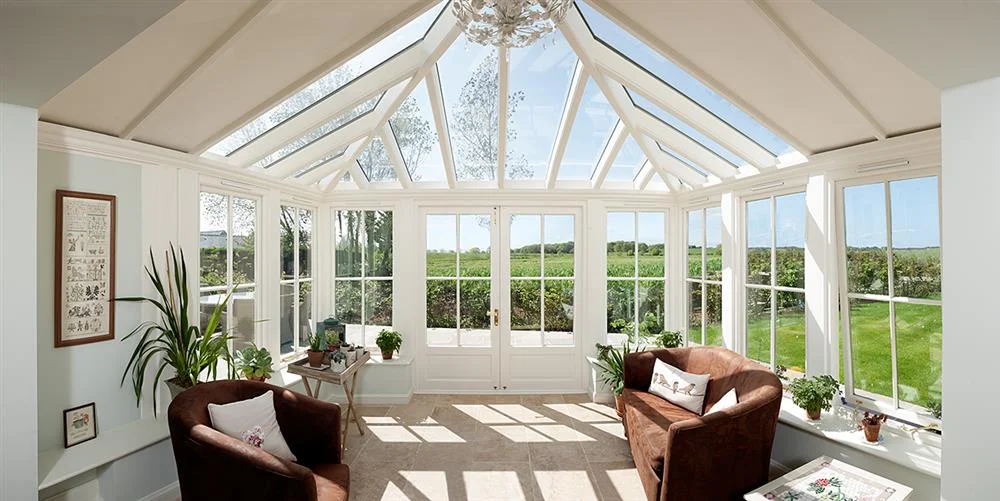
A bright room overlooking a garden or pool sounds attractive. Yet a design copied from a cool climate can become an expensive greenhouse in summer. Poor control of solar heat and cooling is the real problem.
A glass conservatory is an enclosed room attached to a building. Most walls are glazed, and traditional versions also have a glazed roof. It may serve as a lounge, office, indoor garden or poolside retreat.
The terms conservatory, sunroom, garden room and glass room often overlap in Dubai. A classic conservatory usually has more roof glazing, while a sunroom may use a solid insulated roof with wide glazed walls.
Yes, but it must be designed for severe heat. During the 2026 summer, coastal cities such as Dubai and Abu Dhabi recorded highs in the mid-40s Celsius, while inland UAE locations exceeded 50°C. A glass enclosure receives heat from hot outdoor air and direct solar radiation.
A successful design needs low-solar-gain glazing, exterior shade, airtight frames, an insulated roof strategy and correctly sized air conditioning. If one part is missing, the room may remain uncomfortable despite long AC use.
Sunlight passes through glazing and warms floors, furniture and walls. Those surfaces release heat into the room, producing the greenhouse effect.
The roof is the highest-risk surface because it receives strong sun for much of the day. West-facing glass is also difficult because it takes low-angle afternoon sun when outdoor temperatures are already high. This can cause glare, hot surfaces and a larger cooling load.
Do not ask only whether the unit is double glazed. Ask for the tested performance of the complete glass-and-frame system.
The solar heat gain coefficient, or SHGC, shows how much solar energy enters. Lower numbers mean less solar heat. A study comparing Gulf building codes reports that Dubai’s Al Sa’fat requirements used an SHGC near 0.22 for façades with at least 60% glazing, compared with about 0.35 where glazing covered 40% or less. Treat these as discussion benchmarks, not a universal conservatory specification.
U-value shows how easily heat moves through the system. Lower values mean better insulation. The same comparison reports glazed-wall U-values around 1.9 W/m²K for larger glazed areas in Dubai. Final requirements depend on the project and authority review.
Frames and seals matter too. Thermally broken aluminium, safety glass, airtight doors, drainage channels and weather-resistant sealants affect comfort and durability.
Cooling should start outside the glass. Exterior shading stops sunlight before it heats the glazing, while internal blinds mainly reduce glare after much of the heat has entered.
A practical design may include:
Orientation matters. North-facing glazing generally receives less direct sun than west-facing glazing. Where a west elevation cannot be avoided, reduce the glass area or provide deeper shade. Natural ventilation is useful in mild months but cannot replace mechanical cooling in summer.
It is possible, but it is usually the hardest option to cool. A hybrid roof often works better: place an insulated opaque section above the main seating area and use smaller glazed panels where daylight matters most.
This lowers solar gain and glare. For a large glazed roof, ask for a project-specific thermal and cooling-load study.
There is no reliable flat rate because price depends on size, foundations, structural spans, glass performance, roof type, doors, AC work and approvals. Current Dubai suppliers commonly request a site-specific quotation, while some publish broad figures that are not independently verified.
Compare quotations by specification, not only total price. Each quote should list glass make-up, SHGC, U-value, frame series, roof build-up, AC scope, permit responsibility and warranty.
Dubai dust can collect on glass, tracks, roof channels and drains. Plan safe cleaning access before construction. Clean tracks and glass regularly, inspect drainage before wet weather and check seals after strong wind. Current UAE conservatory guidance also stresses cleaning, gutter care and seal inspections.
Watch for misting between panes, cracked sealant, water stains or difficult doors. Service AC filters and condensate drains on schedule.
A glass conservatory is an enclosed home extension built mainly with glazed walls and often a glazed roof; in Dubai, it works best as a shaded, insulated and mechanically cooled room designed for high solar heat.
A conservatory traditionally has a high proportion of glass in its walls and roof. A sunroom may have a solid insulated roof and more conventional wall construction.
No. Double glazing can reduce heat transfer, but comfort also depends on SHGC, roof design, orientation, exterior shade, air leakage and AC sizing. A clear double-glazed roof with no shade may still admit too much solar energy for comfortable summer use.
Yes, when it is designed as a conditioned room with suitable glazing, shade, insulation and AC. During cooler months, operable doors can connect it to the garden.
A glass conservatory can work in Dubai when comfort drives the design. Start with orientation, exterior shade and roof choice. Then select glass by measured SHGC and U-value, calculate cooling needs and confirm approvals before fabrication. That order creates a bright, useful room instead of a costly space that sits empty each summer.